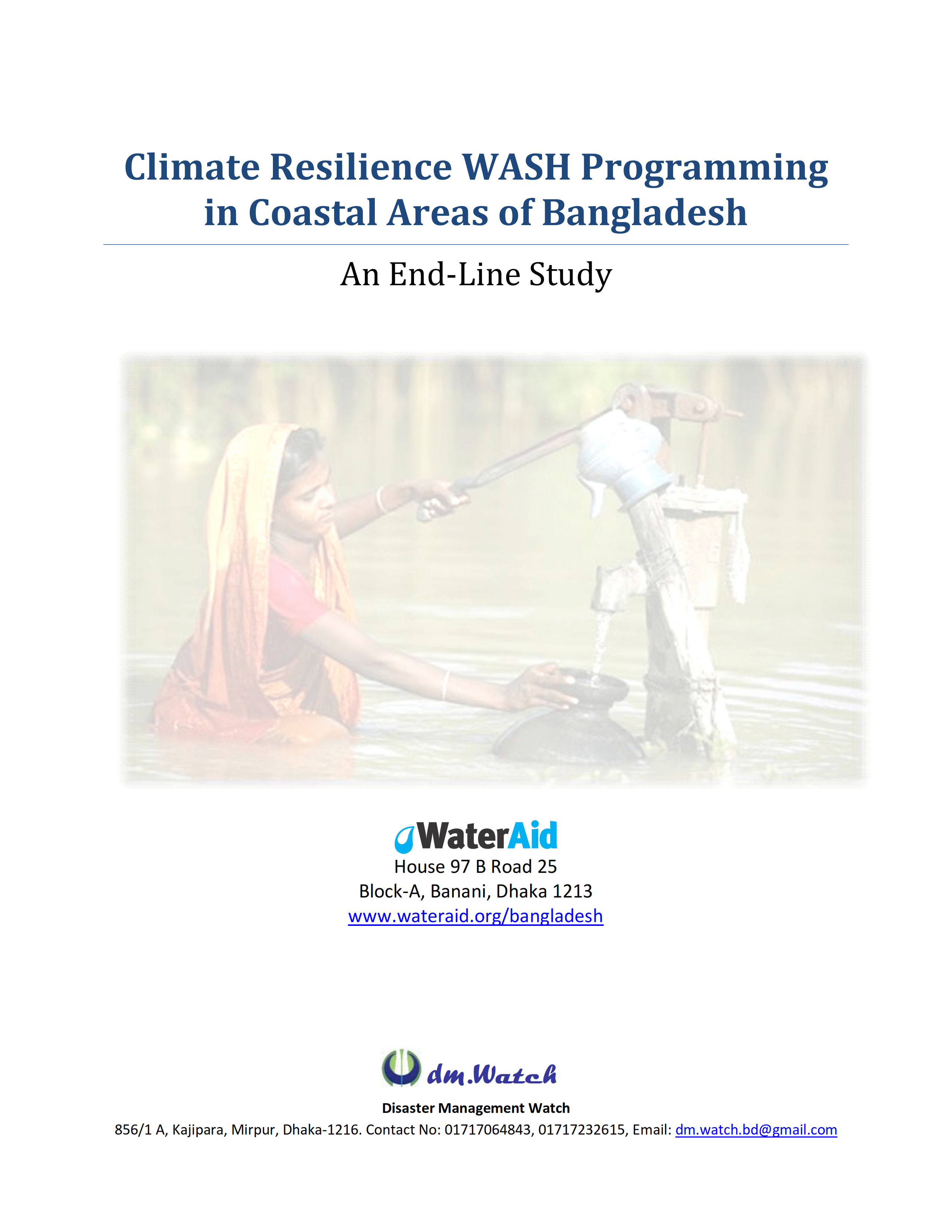
The main objective of this study was to conduct the end line evaluation of the project implemented by WaterAid Bangladesh in two sub-districts of Satkhira district to address the need of climate resilience WASH system. This study collected data using both quantitative and qualitative methods. Quantitative data has been collected through a structured survey from 605 sample households from Assasuni and Shamnagar sub-district. For collection of qualitative data, 2 Unions from 2 Upazilas were randomly selected considering the same union. 8 FGDs, 13 KIIs and 4 case studies were conducted. Secondary data was also collected and analysed. To triangulate the quality of the water, 60 samples were collected and lab tested. This study found that 83% of the surveyed population believed that their water was pure, 95% had access to improved drinking water sources, 50% households were found to access PSF, 83% fetched water from ponds for domestic purposes, and 75% accessed water within a distance of less than 50 meters. More than half of the households were found to clean their water pot once in a day, 84% were using pitchers to collect water. All used mostly three types of pot which were plastic 35%, coconut 26% and melamine 15%. Water Test results revealed that the acceptance level of water quality at households was better than facilities from where the people collect water except iron level, also all tube wells except 29% STW in Assasuni were found free from arsenic. In the case of sanitation, 84% households had improved sanitation facilities, and the majority (39%) of households had pit latrine with a lid. Hygiene wise overall improvement had been seen, 96 % of the respondents washed their hands after defecation. Also, 39% of the households compared to 7.9% in the baseline were found fully aware of the risk factors of climate change. The DMWATCH team recommended a coordinated community approach and further interventions were suggested to ensure “safe water chain” in every household.



© 2024 DM WATCH LIMITED. All Rights Reserved